
Wide Leg Raw Denim: A Practical Review from the Garage
Looking for wide leg raw denim? I've taken apart a few pairs to show you what you're actually getting — construction, fabric, and value. Read on.
I've been wearing raw denim for about eight years now. Most of it has been slim straight or tapered—the kind of cut that dominated the market for a decade. But lately, I've been seeing more wide leg raw denim pop up on forums and in shops. At first I was skeptical. Wide legs can feel baggy or sloppy if the shape isn't right. But after taking a few pairs apart and wearing them for a few months, I think there's something worth paying attention to.
Let me show you what I found.
What Makes Wide Leg Different
The first thing you notice with wide leg raw denim is the fabric. Most pairs I've handled use a heavier weight—14 oz or above. That makes sense because a wide cut needs some structure to hold its shape. If the denim is too light, the legs just collapse and you get a saggy mess. The good pairs use a medium-to-heavy right-hand twill with a firm hand feel. You can feel the tension in the fabric when you pull it across your thigh.
But the real difference is in the pattern. Wide leg jeans have a longer rise, usually mid-to-high, and the top block is cut fuller. That gives room in the seat and hips without the crotch pulling. The legs are straight from the knee down—sometimes even slightly flared. When I measured the leg opening on one pair, it was almost 10 inches across. That's nearly double what my slim jeans measure.
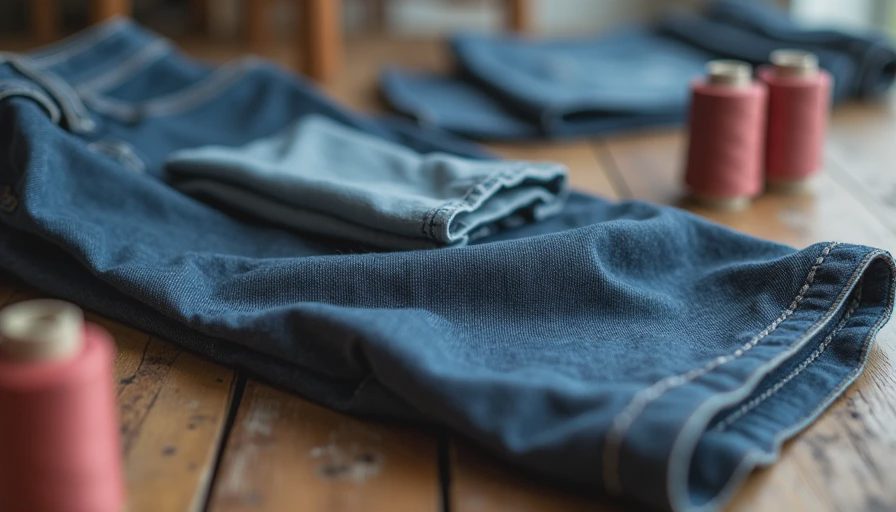
The hem is another detail. With a wider leg, the hem needs to be chain-stitched to keep the roping effect as the denim fades. Most manufacturers understand this, but I've seen cheap wide leg denim with a basic lockstitch that flattens the fabric and kills the silhouette. On the pairs I took apart, the chain stitch was consistent and tight.

What to Look For When Buying
If you're shopping for wide leg raw denim, here are a few things I check before I buy.
First, the rise. Look for a rise of at least 11 inches. Anything shorter and the wide leg starts to look like a costume. A higher rise balances the volume below and keeps the proportions right. Second, the fabric weight. Aim for 14 oz or more. Lighter denim won't drape well and won't develop fades with the same contrast. I've seen 12 oz wide leg jeans that looked good new but after a few washes they became shapeless.
Third, the hardware. The buttons and rivets should feel substantial. I prefer copper or iron buttons that patina over time. Cheap zinc alloy stuff will tarnish and flake. The button shank should be long enough to fit through thick fabric without straining. And the fly buttons should be sewn on with a cross stitch, not a single pass—that's a sign the maker knows the stress points.
Finally, the selvage line. Most wide leg raw denim I see is selvage, but not all. If it's not selvage, the outseam will be a standard overlock stitch. That's fine for some, but if you're paying over $200, you want the clean finish of a selvage edge. It's not just about looks—selvage denim tends to be woven on older looms that produce a tighter, more durable fabric.
A Pair I've Worn and Taken Apart
A few months ago, I bought a pair of wide leg raw denim from a small Japanese brand. They're 15 oz, unsanforized, with a high rise and a straight leg that measures 9.75 inches at the hem. I wore them for about four months straight—washing once at the two-month mark. The fades are slow but even. The fabric has a slight slub that catches light along the thighs.
After those four months, I took them apart. I wanted to see how the construction held up. The side seams were felled with a double needle, which is standard for good jeans, but I noticed the crotch reinforcement wasn't as generous as I'd like. There was a single layer of fabric crossing the back yoke that could be a stress point down the line. The pocket bags were a heavy cotton twill, which is good, but the stitching was a bit loose in the corners. Nothing critical, but something to watch.
The hardware surprised me. The button shank was brass and the rivets were copper with a smooth finish. After months of wear, they had a nice patina—not too shiny, not too dark. The thread used for the hem was a thick polyester core, which means it will last longer than cotton thread, but it doesn't shrink with the fabric. That's a trade-off. I prefer cotton thread for the roping effect, but polyester is stronger.
Final Thoughts
Wide leg raw denim isn't for everyone. The silhouette is bold and it takes some getting used to if you've been in slim jeans for years. But if you want a change of pace and you appreciate good construction, it's worth trying. The key is finding a pair with the right rise, the right weight, and the right hardware. Don't settle for cheap fabric or sloppy stitching.
Good things last. Bad things don't. And a well-made pair of wide leg raw denim, worn and faded over time, is one of those good things. I'll probably keep wearing mine—at least until I take them apart again to see how they're aging. That's the thing about raw denim: you never really stop learning from it.