What Are Jeans Made Of? A Close Look at Denim Construction
What are jeans made of? Let’s look past the label. Cotton, hardware, thread—I’ll show you the materials that make a great pair of jeans. No fluff.
Most people grab a pair of jeans without thinking about what’s actually in them. I get it. But if you’ve ever wondered what are jeans made of, the answer goes deeper than just “cotton.” I’ve taken apart dozens of pairs — from cheap mall brands to Japanese selvedge — and the differences in materials are night and day. So let’s break down the components that make up the jeans on your legs right now.
Cotton is the obvious starting point, but not all cotton is the same. The type and origin of the cotton fiber affect how the denim feels, fades, and wears. Good jeans use long-staple cotton (like Supima or Egyptian), which spins into smoother, stronger yarns. Short-staple cotton pills faster and doesn’t hold up as well. You’ll usually only see the fiber length on higher-end brands — mass-market ones rarely mention it, because it’s often short.
The Fabric: Denim and Its Fibers
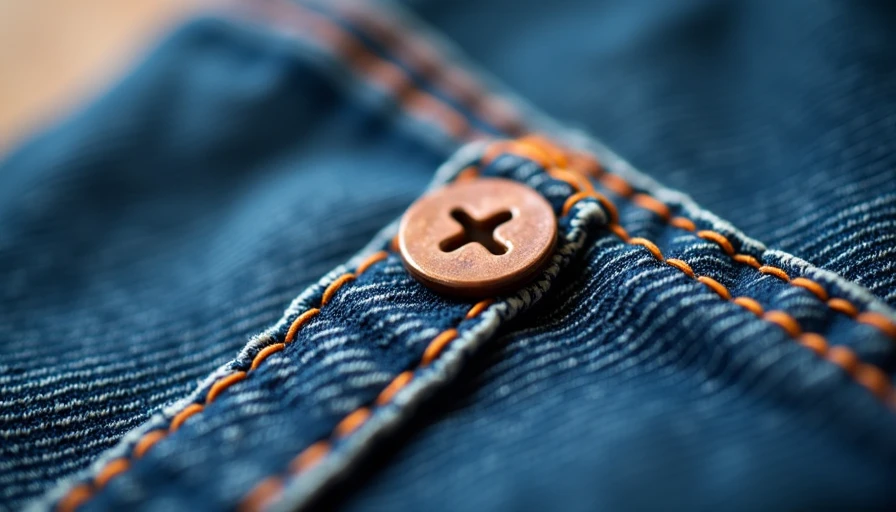
Denim is a twill weave, meaning the weft threads pass under two or more warp threads. That diagonal ribbing is what gives denim its structure. The warp threads are typically dyed with indigo (or a synthetic version) before weaving; the weft stays unbleached. That’s why the outside is blue and the inside is white. Pure indigo dye fades beautifully over time — sulfur dyes don’t. Cost-conscious brands often skip pure indigo, and the fades show it.
Some jeans also add a little stretch. A small percentage of elastane (usually 1–3%) in the weft makes them comfortable but changes how they wear. Pure cotton denim molds to your body over time; stretch denim springs back. Neither is wrong — it’s just a trade-off. If you’re asking what are jeans made of because you want them to last longer, go with 100% cotton or a very low elastane content. I’ve seen 2% elastane jeans lose their shape after six months.
The Hardware: Buttons, Rivets, and Zippers
Look at the buttons and rivets on your jeans. Cheap ones are plated zinc — the coating flakes off, and the metal corrodes. Better jeans use solid brass, copper, or stainless steel. The buttons should feel weighty and snap securely. Rivets on the pockets? Real copper rivets will darken and patina over time. Painted or fake ones lose their color. I’ve cut out rivets from a $30 pair; the metal was so soft it bent with a pair of pliers.
Zippers matter too. YKK is the most common zipper brand — they make reliable stuff. But high-end jeans often use Talon, the original zipper supplier to Levi’s back in the day. If the zipper feels cheap and the teeth are plastic instead of metal, expect it to fail. Button fly vs. zipper is a preference thing, but a button fly removes the weakest point — the zipper mechanism — so it tends to last longer.
The Stitching: Thread That Holds It Together
If you want to know what a pair of jeans is really made of, look at the thread. Most jeans use polyester core-spun thread — strong, resists rot. But some premium brands use cotton-wrapped polyester (which feels softer) or all-cotton thread (which frays and ages gracefully). The stitch type matters more than you’d think: chain stitches unravel if one stitch breaks, but they give that roping effect on hems. Lock stitches are more secure but less flexible.
I’ve unpicked seams from a pair of Levi’s 501s and from a pair of luxury Japanese jeans. The thread count per inch was nearly identical — but the Japanese pair used a heavier gauge thread and back-tacked the seams. That’s a one-cent upgrade at the factory that makes a huge difference in durability.
Beyond the Basic: Blends, Washes, and Treatments
What are jeans made of today isn’t always just cotton. Brands add polyester, rayon, or lyocell to create stretch, reduce weight, or change the texture. I’m not against blends, but they change how the jeans fade and breathe. A 60% cotton / 40% polyester blend isn’t going to develop the same whiskering as 100% cotton. If you’re looking for that vintage fade pattern, stick with full cotton.
Washes and treatments also affect the fabric. Raw denim hasn’t been washed — it’s stiff, dark, and will fade with wear. Pre-washed or one-wash denim is softer and shrinks less. Enzyme washes or abrasive treatments weaken the fibers. I once deconstructed a pair of heavily sandblasted jeans and found the warp threads had snapped in several places. They looked worn-in, but they didn’t last.
Why It Matters: What to Look For
So next time you’re shopping, you can ask yourself: what are jeans made of in this pair? Check the label for cotton origin, look at the rivets (are they magnetic? zinc ones are), feel the denim weight. A simple test: twist the fabric. If it feels thin and flimsy, the thread count or yarn quality is lacking. If it holds its shape and has a solid handfeel, the construction is better.
Good things last. Bad things don’t. Understanding the materials is the first step to buying jeans that will age well, not fall apart.