
When Were Sunglasses Invented? A Look at the History of Eyewear
Curious when were sunglasses invented? This guide traces eyewear from Inuit snow goggles to modern shades. Discover the craft behind vintage frames.
I’ve taken apart a lot of old things in my garage—jeans, boots, jackets. But a few months ago, a friend handed me a pair of vintage sunglasses from the 1950s. The frames were horn-rimmed, the hinges were brass, and the whole thing felt solid in a way modern plastic frames don’t. It got me thinking: when were sunglasses invented, and how did we get from functional eye protection to the mass-produced accessories we see today?
Let me show you.
The Early Origins: Inuit Snow Goggles and Roman Emeralds
Long before anyone called them sunglasses, people were shielding their eyes from the sun. The Inuit carved goggles from walrus ivory or driftwood, with narrow slits that cut glare from snow. Those date back to around 2000 BCE. Not exactly sunglasses in the modern sense, but the idea was there: protect your vision from bright light.
In ancient Rome, Emperor Nero watched gladiator fights through polished emeralds. Pliny the Elder wrote about it. Was that a luxury item or a practical tool? Probably both. But again, not something you’d wear walking down the street. It would be centuries before someone put tinted lenses in frames designed to stay on your face.
The 18th and 19th Centuries: Tinted Lenses for the Wealthy
The first wearable tinted spectacles appeared in China around the 12th century—quartz lenses smoked to reduce glare. But they were used mostly by judges to hide facial expressions. Not exactly a fashion statement.
Fast forward to 18th-century Europe. James Ayscough, an English optician, experimented with blue- and green-tinted lenses. He thought they could correct vision problems. His work in the 1750s is often cited as an early step toward sunglasses. But they were still custom-made for the wealthy, not something you’d buy off a shelf.
Then in the 1800s, tinted spectacles became popular among the upper class for outdoor activities. You see them in paintings of the era—ladies with small, dark oval frames at the beach. They were a sign of refinement, not sun protection.
So, when were sunglasses invented in the way we think of them today? That’s a different question.
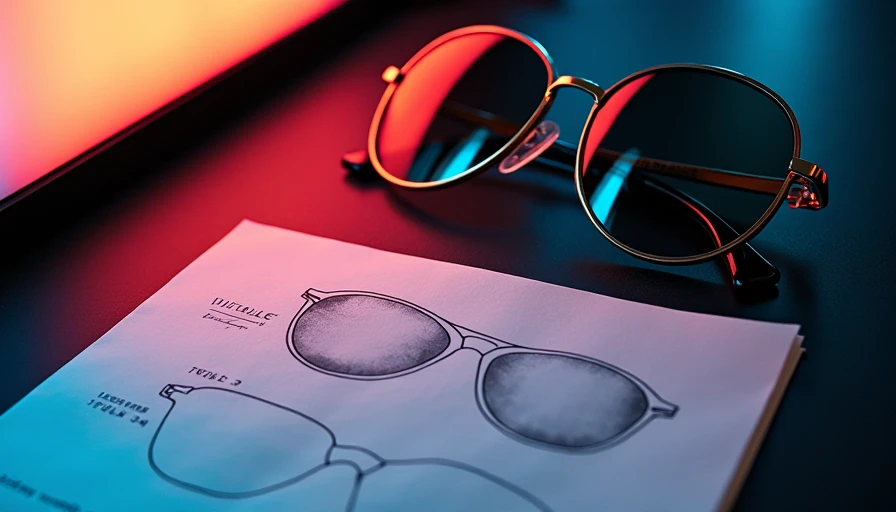
The 20th Century: From Hollywood to Mass Production
The real turning point was the 1920s and 1930s. American soldiers in World War I started wearing sunglasses for practical reasons—glare from the sea, dust in the air. But it was Hollywood that made them iconic.
In the 1920s, movie stars wore sunglasses to shield their eyes from the bright studio lights and to hide from paparazzi. By the 1930s, you couldn’t open a magazine without seeing Clark Gable or Marlene Dietrich in shades. The demand exploded.
In 1937, Bausch & Lomb created the first mass-produced sunglasses designed to reduce glare for pilots. They called them “Ray-Ban Aviators.” That same year, Polaroid invented polarized lenses, which cut glare even better. Suddenly, sunglasses weren’t just tinted glass—they were functional, fashionable, and affordable.
By the 1950s, sunglasses were a staple of American culture. The 1960s saw oversized frames, the 1970s mirrored lenses, and the 1980s brought sports wraps. The question “when were sunglasses invented” isn’t as simple as a single date—it’s a story of slow refinement.
What Vintage Sunglasses Teach Us About Craft
I pulled apart that 1950s pair I mentioned earlier. The acetate frame was thick, with brass hinges held by small screws—not the cheap plastic pins you see today. The lenses were glass, not polycarbonate. They had a slight green tint from the cobalt used in the glass. And the nose pads? Real metal, not rubber. Every detail was overbuilt for longevity.
Compare that to a modern $20 pair you pick up at a drugstore. They’re lightweight, sure, but the hinges will break in a year. The lenses scratch easily. And you can’t adjust them because the frame is molded in one piece.
That vintage pair wasn’t just about fashion—it was about building something that would last. Good things last. Bad things don’t.

A Timeline Worth Knowing
If you’re asking “when were sunglasses invented,” here’s a quick breakdown:
- **2000 BCE**: Inuit snow goggles, carved from ivory or driftwood.
- **1st century CE**: Roman emeralds used as visual aids by Nero (debatable).
- **12th century**: Chinese judges wear smoked quartz lenses.
- **1752**: James Ayscough creates tinted spectacles for vision correction.
- **1920s**: Hollywood popularizes sunglasses as a fashion accessory.
- **1937**: Ray-Ban Aviators introduced; Polaroid patents polarized lenses.
- **1950s–60s**: Sunglasses become mass-market, with diverse styles.
So, the answer depends on how you define “sunglasses.” If it’s tinted lenses in a frame meant for outdoor use, the 18th century is a reasonable start. If you mean the mass-produced, polarized shades we know today, 1937 is your year. But the real craft happened long before that, in the hands of people who understood materials and light.
Final Thoughts
Next time you pick up a pair of vintage shades at a flea market, take a close look at the hinges, the lens tint, the weight. You might see the history built into them. And if you’re wondering when were sunglasses invented, remember: it’s not a single moment, but a series of small improvements by makers who cared about how things work.
I’ll be back in the garage soon, taking apart another piece of the past. Until then, keep your eyes on the details.