
How to Repair Work Pants So the Patch Becomes Part of the Story
Don't match the color. Use contrast fabric. Cut the patch bigger than the hole. Stitch loose, not tight. Leave the edges a little rough. My best repair had one corner unfinished for three days. That corner is still my favorite part.
I ripped my favorite Carhartts last fall. Caught them on a fence post outside Bend. Big hole. Right knee. My first thought was trash them.
Second thought was patch them ugly. You know the look. Dark blue square. Machine stitches. Looks like you're hiding something.
I didn't want that either.
So I did it slow. By hand. And now that patch is my favorite part of those pants.
Forget Matching
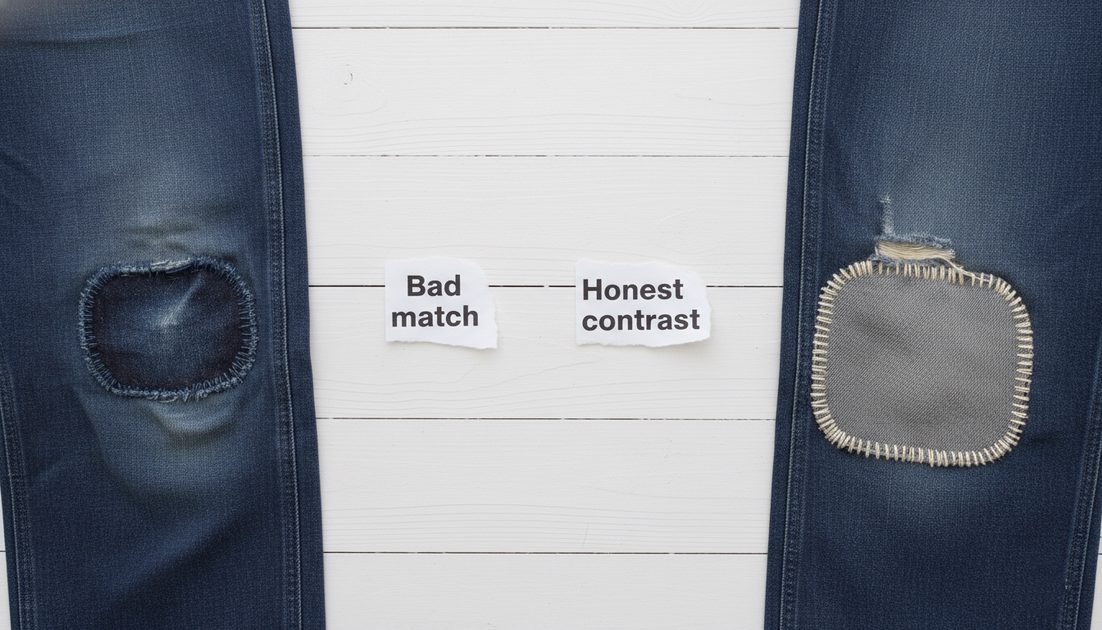
Most people try to match the fabric color. Don't. You'll never get it right. The original denim has years of fade. A new patch in the same color just looks wrong. Like a bad toupee.
Use something different.
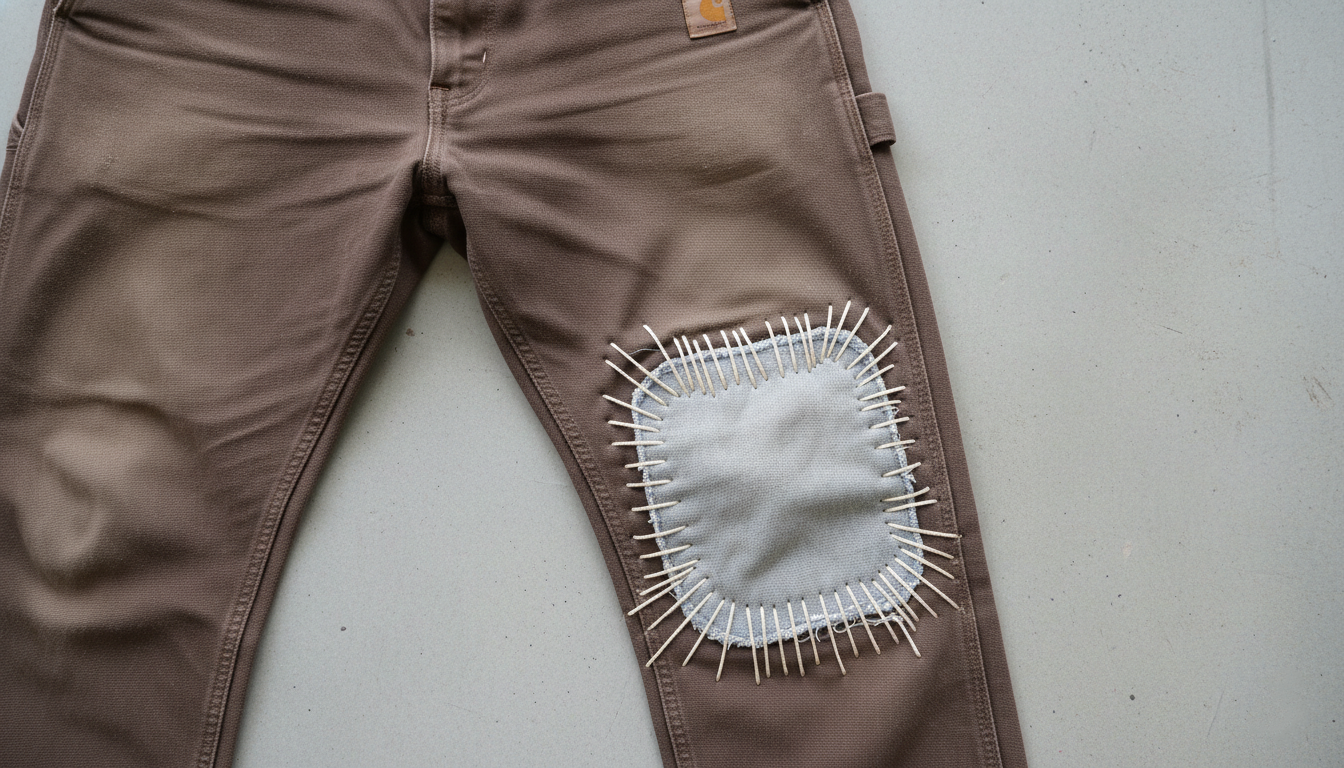
I used an old pair of dead jeans. They were lighter. Almost gray. The contrast works. Every time I look down, I see the darker original denim next to the faded patch. It tells you which part is old and which part is new. That's honest.
Maya said it looks intentional. It wasn't. I just didn't have anything else.
Cut Bigger Than You Think
I cut a patch exactly the size of the hole. First try. Sewed it in. The edges pulled within two weeks. Ripped again right next to the patch.
Stupid mistake.
Second time I cut a patch two inches bigger on every side. Gave myself room. If the edges fray, they fray into the patch, not back into the pants.
Also round the corners. Sharp corners peel up. Rounded ones stay down. Learned that from a leatherworking mistake last year.
Stitch Loose
Your instinct will be small tight stitches. Resist it. Small stitches make the fabric pucker. Big loose stitches let everything move together.
I used a running stitch. Simple. In and out. About a quarter inch long. Left space between each stitch. When I pull the thread, it bunches just a little. That's good. That's how old repairs look.
Don't backstitch at the ends either. Just leave long tails and knot them separate. Backstitching makes a hard spot. Fabric should feel soft when you're done.
The Part Nobody Talks About
I left one corner unsewn for three days. Just forgot. Walked around with a flap hanging off my knee. Maya asked if I was making a statement. I said no I'm just lazy.
Finished it Thursday night.
That loose corner has a different thread tension than the rest. You can see it if you look close. I could rip it out and redo it. But I won't. That corner reminds me I did this repair in pieces. After work. When I had time.
That's the story. Not some perfect job done in one sitting.
What to Patch and What to Let Go
Don't patch crotch blowouts. I tried. Waste of time. The stress is too high. It'll rip again in weeks. Just retire those pants or turn them into shorts.
Patch knees. Patch thighs. Patch pockets if the hole is small. Elbows too.
And patch things early. Don't wait until the hole is the size of your fist. Small holes take ten minutes. Big holes take two hours and look worse.
The Honest Truth
My first repair looked terrible. Thread too thick. Patch too small. Stitches too tight. I wore those pants anyway. Three months later the patch had softened. The threads had faded. It looked good just by accident.
That's when I understood.
A good patch isn't invisible. It's just honest. It shows you cared enough to fix something instead of throwing it away. That's not fashion. That's just being a person who doesn't waste things.
My Carhartts still have that scarred knee. I like it more than the clean one.